“Eurobalkans” International Project between Universities from Sofia, Skopje and Niš — Student Project, UACEG
International Projects

International Project · Bulgaria, Serbia, North Macedonia · 2011

“Eurobalkans” International Project between Universities from Sofia, Skopje and Niš — Student Project, UACEG

01 / Summary

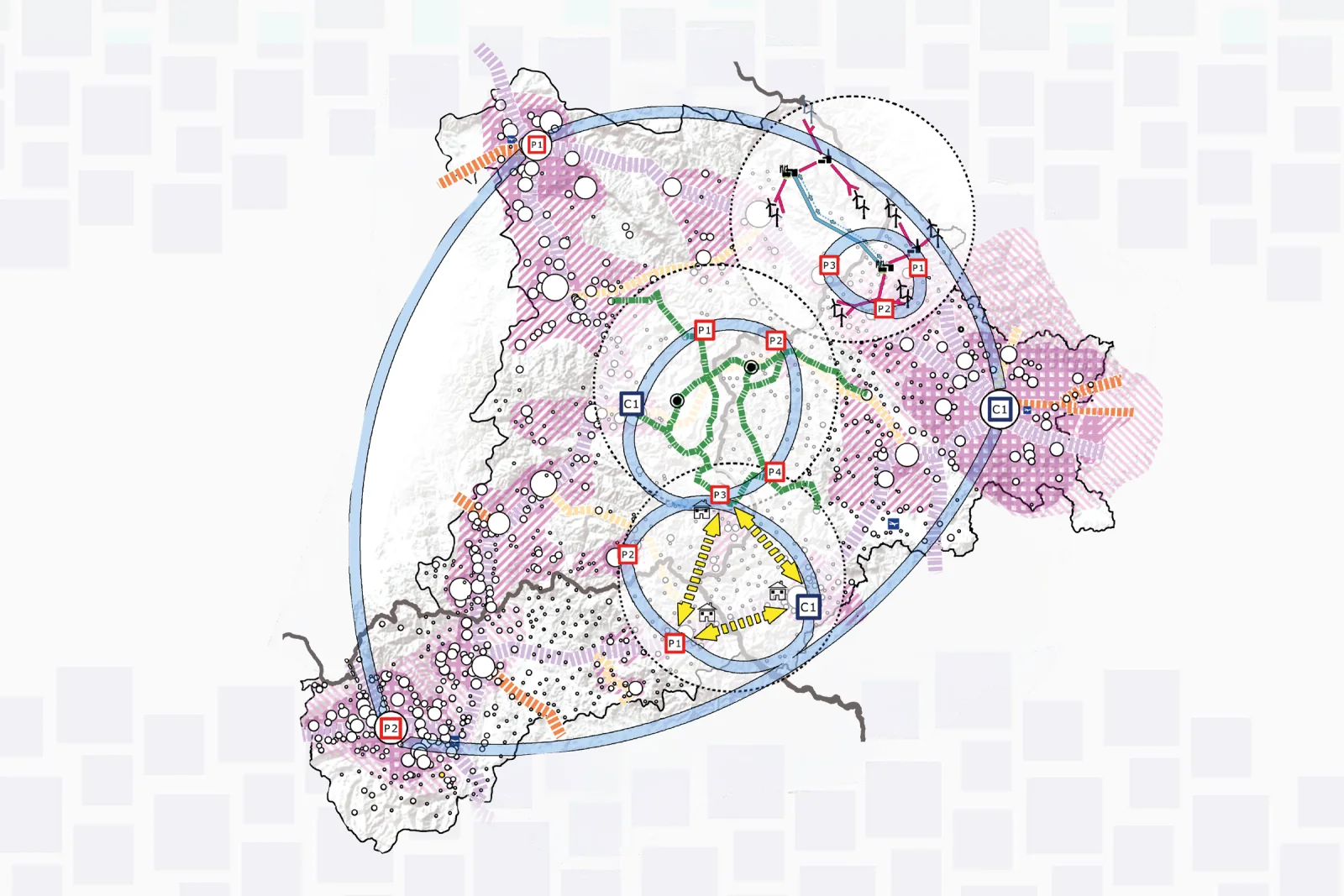
The international project “Eurobalkans” focuses on studying contemporary trends in the development of the settlement network and the opportunities for spatial and functional linkage of the territories of Sofia, Niš and Skopje. Particular emphasis is placed on the hierarchy of settlements, regional centres, transport and infrastructure links, and the socio-economic interactions between the three countries. The project explores ways of overcoming territorial disparities and building a shared development vision through cross-border cooperation.

Location
Bulgaria, Serbia, North Macedonia
Category
International Project
Period
2011
Role
Participation in a Student Project, UACEG
Participation
Academic project
02

What was done

Participation in the development of a comprehensive urban planning analysis of the cross-border territory between Bulgaria, Serbia and North Macedonia. Studies were carried out of the settlement network, its hierarchical structure, demographic and socio-economic characteristics, transport connectivity and the functional relationships between the individual territories. On the basis of the analyses, thematic graphic diagrams, spatial models and design proposals were developed, aimed at the integrated development of the region under study.

03

Scope

The work covers territories in Bulgaria, Serbia and North Macedonia, with the study focused on the spatial relationships between the main urban centres — Sofia, Niš and Skopje — and their surrounding regions. In the course of the work, various urban planning, spatial and socio-economic studies were carried out, on the basis of which analytical and graphic materials were developed. They present the main characteristics of the territory, the identified trends and development potential, as well as summarised design proposals for integrated planning and cross-border cooperation.

04

Result

An analytical and conceptual basis was created for formulating common directions for the spatial development of the cross-border territory between Bulgaria, Serbia and North Macedonia. The work highlights the potential for strengthening regional connectivity, improving the functional relationships between settlements and encouraging joint economic, infrastructure and tourism initiatives. Through the integrated approach to territorial planning, it underlines the importance of cooperation between the three countries in overcoming regional imbalances and creating preconditions for sustainable and coordinated development.